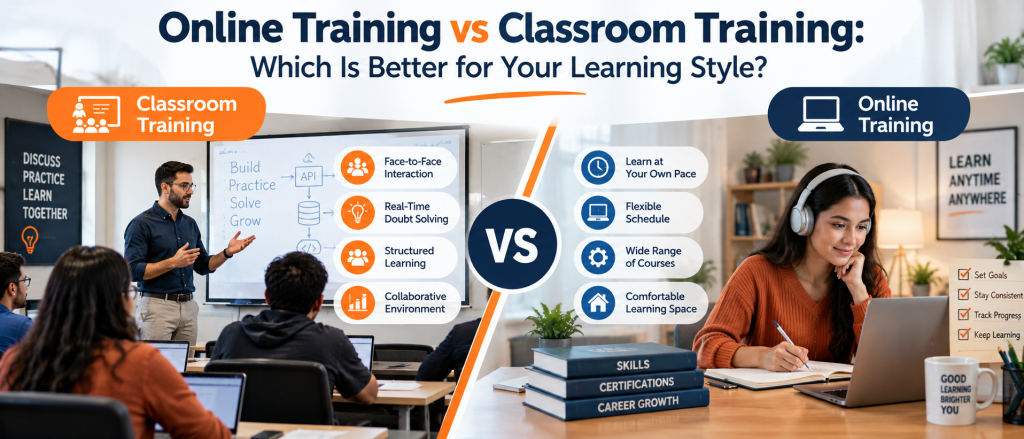
Learners have been going through changes in how they acquire information for years now. It is not necessary for a learner to go through the process of sitting down inside a classroom to be able to learn anything that he needs or wants to.
Online courses, online classes, video lectures, virtual interactions and many more are some of the media that can help a learner to acquire information without physically being present inside a classroom.
But classroom training still remains a very useful form of training.
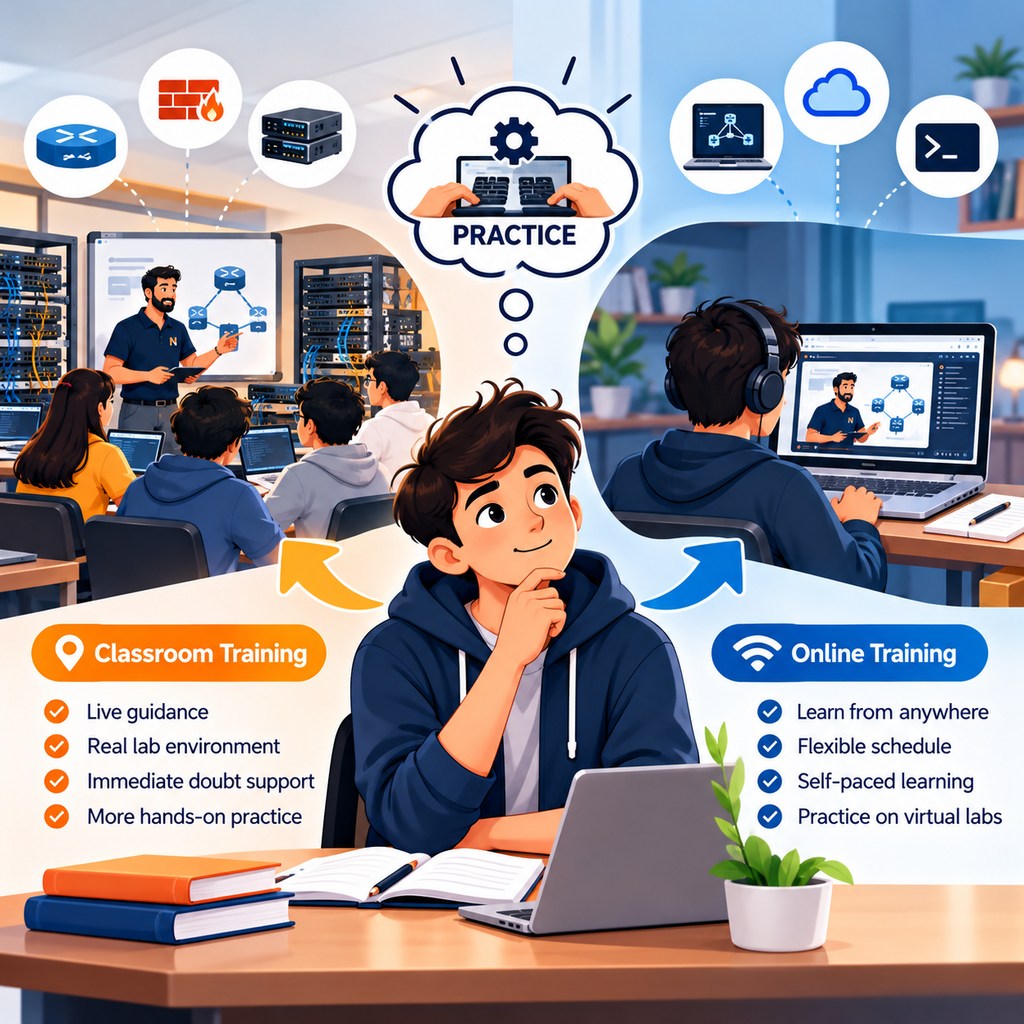
Being in the presence of an instructor, interacting with him personally, group discussion, doing things practically and being in an environment designed to facilitate learning are some of the aspects that help traditional teaching and training become successful.
So, which one is better? Learning Online or in Classroom! The question does not matter much anymore, as the choice lies with the learner, who needs to decide on his own learning style.
Online Training vs Classroom Training: Understanding the Difference
It is vital that you get acquainted with the peculiarities of both formats before deciding on which one to opt for.
| Online training includes delivering lectures, assignments, testing, presentations, and demonstrations using digital media. | Classroom training involves attending lessons on campus where both trainees and trainers are present in the same physical space. |
While both formats can provide you with high-quality education, they offer a completely different learning experience.
Typically, online learning offers more flexibility, while classroom training is characterised by more rigid scheduling and more interactive sessions. The best choice depends on factors like your area of expertise and personal preferences.
1. Student Discipline: Can You Stay Consistent?

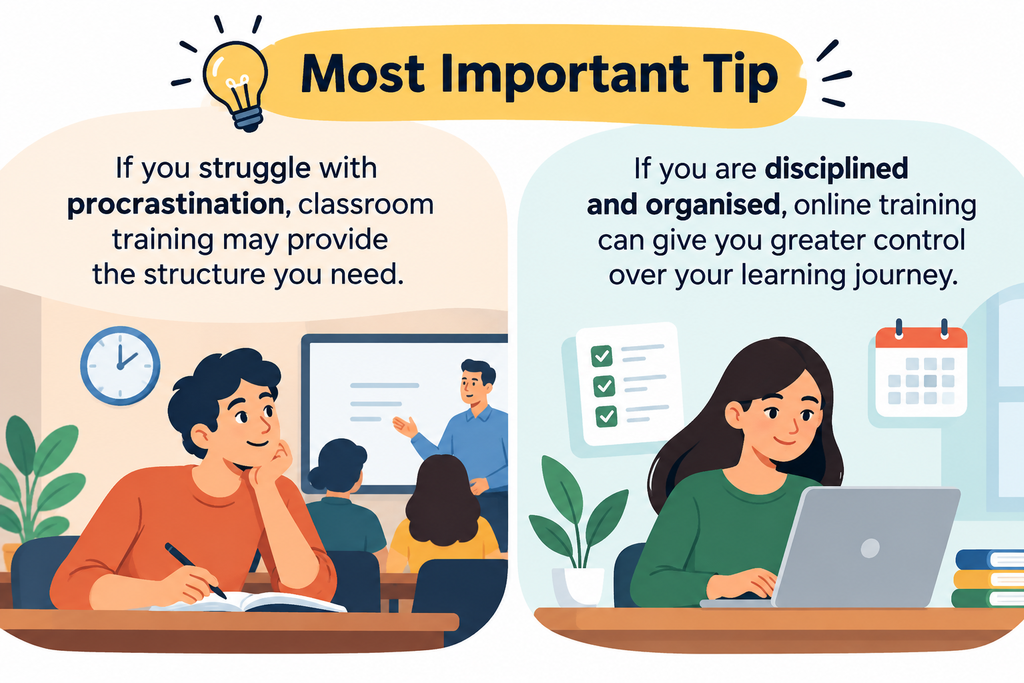
The main distinction between online and classroom training is related to self-discipline.
Online training provides flexibility; however, it also implies that certain personal responsibility for your schedule is expected.
Consider the following aspects:
| 1. | Online training demands self-management: The creation of your own study schedule, regular participation in classes, the completion of all assignments and revision of the material on your own initiative. |
| 2. | In-class training creates a certain routine: Fixed times of your classes and their physical attendance can help you develop the habit of studying. |
| 3. | Distractions may interfere with your online training: Social media, mobile devices, home activities and any type of entertainment can easily distract you from your online class. |
| 4. | Self-motivated learners can gain much from online training: If you are an organised person who plans your work and completes tasks on time, then online training will allow you to have plenty of freedom. |
| 5. | Classroom learners are provided with an outer structure: Physical presence in the training environment can motivate learners to take their study schedule seriously. |
2. Interaction: Do You Learn Better by Communicating?
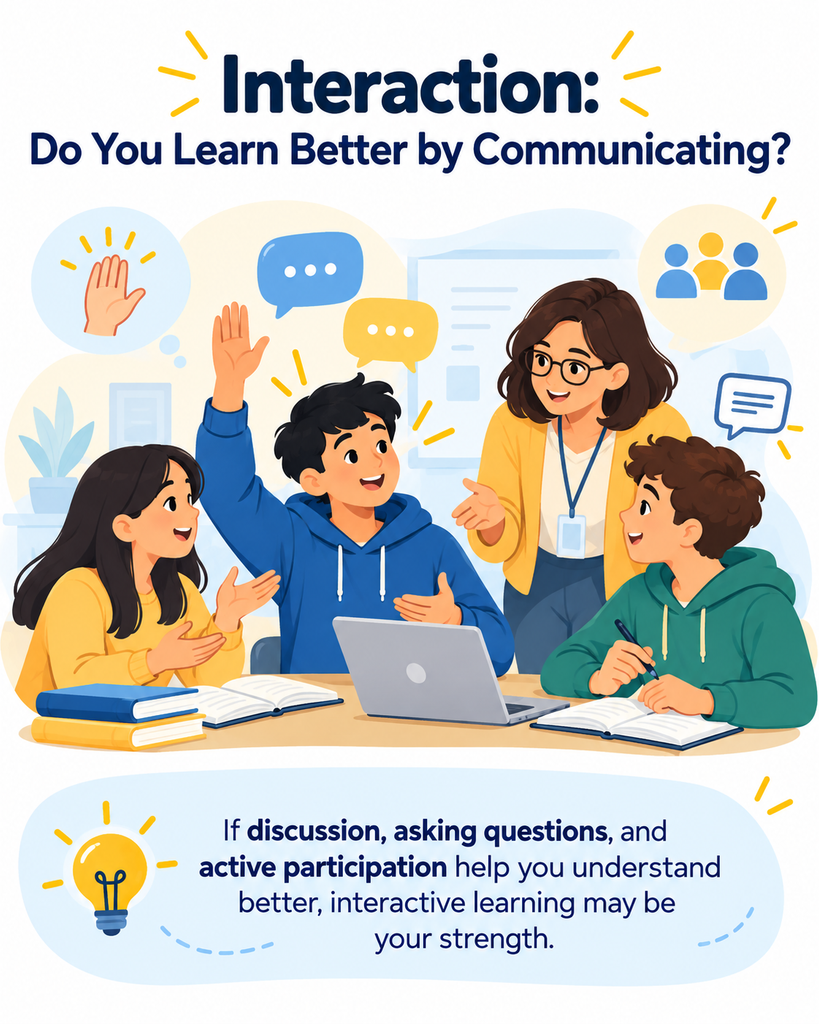
Learning is not always about being an attentive listener during lectures. In certain cases, asking questions, engaging in discussions, or explaining things to another person might help one understand the information better.
This is when interaction becomes crucial.
| Classroom Learning Promotes Direct Communication In the classroom, students have an opportunity to communicate face-to-face with teachers and other students. It is possible to ask questions right away and participate in team projects. Also, it is possible to learn something from peers, since everyone listens to various opinions. |
| Online Training Is Not Always Passive Today’s online training is not necessarily passive, since there are live classes, chat, forums for discussions, virtual laboratories, quizzes, breakout rooms, and even classes led by instructors. The level of interaction varies depending on the class and platform. |
If one is a conversationalist, a student who enjoys listening to presentations and taking part in discussions, then the most interactive classroom would be a good option. Otherwise, it would be easy to learn online as well.
Hear From Our Students!
Discover what students have to say about their learning experience at Network Bulls.
- Online Training Testimonials: Hear directly from students who completed their online training at Network Bulls. Watch Now
- More Student Testimonials: Explore additional student experiences and success stories. Click Here
3. Practical Learning: Where Does Practice Matter Most?
Knowing about something is only half the battle. Doing something is where knowledge becomes a skill.
Technical Training: It’s Not Just About Learning, It’s About Practising!
It is especially true for professional, technical education and IT training, networking, cybersecurity, programming, data analysis, digital marketing and many other career-focused areas.
Any good course of training must offer learners practical practice.
Think about it when considering practical learning:
| 1. | Practical experience enhances understanding: Doing it yourself helps you see how theoretical concepts work in practice. |
| 2. | The classroom environment allows for instant feedback: Trainees can carry out practical exercises under the supervision of an instructor and receive corrections from him/her. |
| 3. | Online training offers virtual practice: Simulators, cloud labs, coding environments, virtual machines, and interactive assignments can make e-learning highly practical. |
| 4. | Practical training is not just about watching someone else doing things: Watching an instructor performing some task does not mean that you will be able to do it yourself. |
| 5. | Projects reinforce both approaches: Practical assignments and projects help connect learning to professional requirements. |
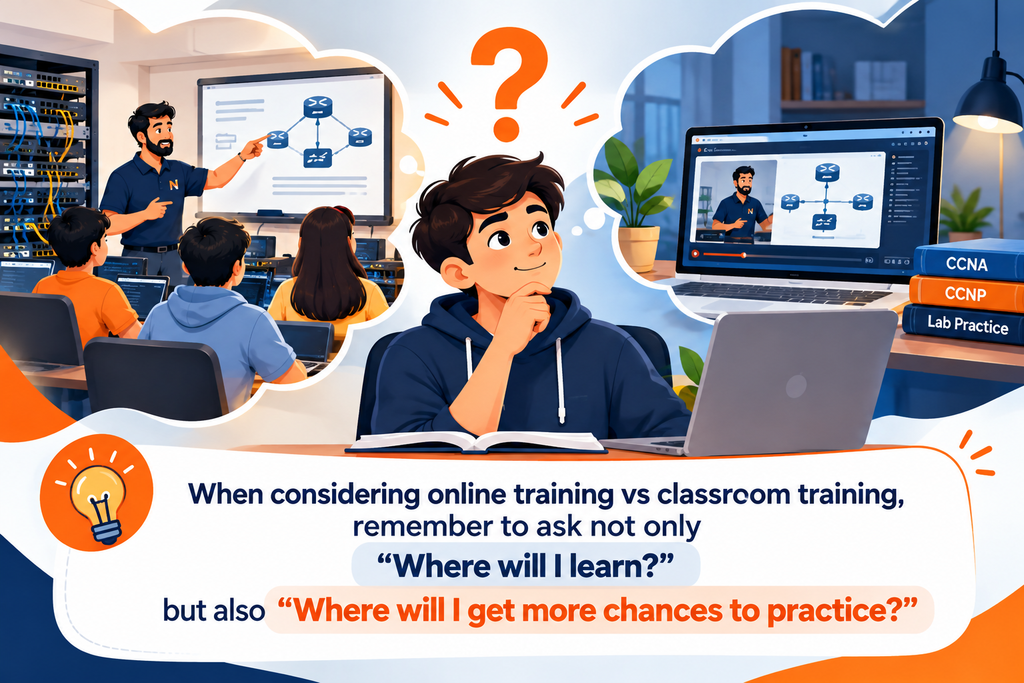
When considering online training vs classroom training, remember to ask not only “Where will I learn?” but also “Where will I get more chances to practice?”
It will allow you to make the right decision.
4. Flexibility: How Important Is Freedom in Your Schedule?
One of the most significant benefits of online training is flexibility.
The student can learn from his home, from the library or any other convenient place. Depending on the course he chooses, he will have an opportunity to watch recordings of classes and learning materials.
Online training is extremely useful to working professionals and students having several commitments to manage.
Online training provides:
| Flexible schedule | Students can plan his studies according to his college schedule, job, internships and other commitments. |
| Geographical freedom | No daily need of going to a physical training centre. |
| Recordings of the classes | Some courses provide the option to see the classes again to understand everything better. |
| Diverse selection of courses | Students can choose courses and tutors regardless of location. |
| Extra time | Eliminating daily commuting gives students more time to practise and revise the material. |
The classroom training has a less flexible schedule. However, for students needing a structured schedule, it can be rather helpful.
Hence, flexibility is a useful factor but only in case the student knows how to make use of it.
5. Accountability: What Motivates You to Follow Through?
Picture yourself joining a new online course now. You feel energized, attend a couple of classes, and come up with a rigorous schedule.
And then there is a hectic week ahead.
You miss one class and then another. Deadlines slip away. Revision is put off. Ultimately, your course stays incomplete.
That’s when the idea of accountability in the learning process becomes important.
| Classroom training naturally fosters accountability through attendance, deadlines, observations, tests, and ongoing interaction. | Online training asks students to build their own sense of accountability or choose a course that provides it |
Try to look for the courses that offer:
- Regular evaluations: Tests and quizzes may help check if the content is understood.
- Deadlines for assignments: Timely submission makes one responsible.
- Feedback from the teacher: It will help to identify errors before they transform into knowledge gaps.
- Progress reports: Reports of various kinds will allow students to evaluate how constant they are.
- Mentorship/doubt clearing sessions: Continuous interaction with the teachers makes online learning systematic.
The more accountability a course provides, the easier it becomes to stay consistent.
Online Training vs Classroom Training: Quick Comparison
Both learning formats have their strengths. The following comparison can help you identify which environment aligns better with your needs.
| Factor | Online Training | Classroom Training |
| Flexibility | Very high | Moderate |
| Schedule | Often flexible | Usually fixed |
| Interaction | Digital/live | Face-to-face |
| Discipline | Requires strong self-management | Structure encourages consistency |
| Practical Learning | Virtual labs and projects | Physical demonstrations and guided practice |
| Travel | Not usually required | Usually required |
| Peer Interaction | Depends on platform | Naturally available |
| Accountability | Depends on course structure | Usually stronger through attendance and deadlines |
| Revision | Often easier with recorded resources | Depends on institute |
| Best For | Self-directed learners | Students who prefer structured environments |
Which Learning Style Is Right for You?
Do not make a decision solely depending on popularity and convenience. Think what suits you best.
| Choose Online Training If You | Choose Classroom Training If You |
| Feel more comfortable studying at your own pace and controlling your schedule. | Feel better discussing questions directly and getting answers personally. |
| Prefer to study independently without constant supervision. | Need a set schedule to stick to. |
| Need flexibility due to studying at university, working, completing internships, and so on. | Want to interact immediately with the teacher and other students. |
| Do not mind studying online, using recorded lessons, and other digital resources. | Enjoy group work and discussion. |
| Are ready to develop your study routine. | Find it hard to study independently. |
| Are interested in courses which cannot be found locally. | Like supervision and evaluation. |
What is crucial is that the learning style is individual. Two people can attend one course and perceive everything totally differently depending on their learning style and consistency.
Can a Blended Learning Approach Be Better?
Why limit yourself to one method?
Most modern training combines online material with classroom-based or instructor-led learning. This method is called blended learning or hybrid learning.
This learning mode could combine all the best elements of each approach.
The student could participate in classroom or instructor-led sessions for interaction and explanation, using the online material for revision and self-study.
Blended learning could offer:
- Structure along with flexibility: Fixed classes make the student accountable whereas digital material adds to flexibility.
- Opportunities for revision: The student could review their online material after the classroom sessions.
- Balancing theory and practice: Instructor-led classes could be combined with digital labs and assessments.
- Continuous involvement: Regularly participating in online activities will keep the student involved.
- Personalized learning: The student could spend extra time on topics that are difficult to understand.
For many career-focused learners, this combination can provide a balanced learning experience.
How to Choose the Right Training Format
Selection of the course must go beyond a simple comparison of online/offline costs and the total number of lessons.
Prior to joining any class, consider some basic questions.
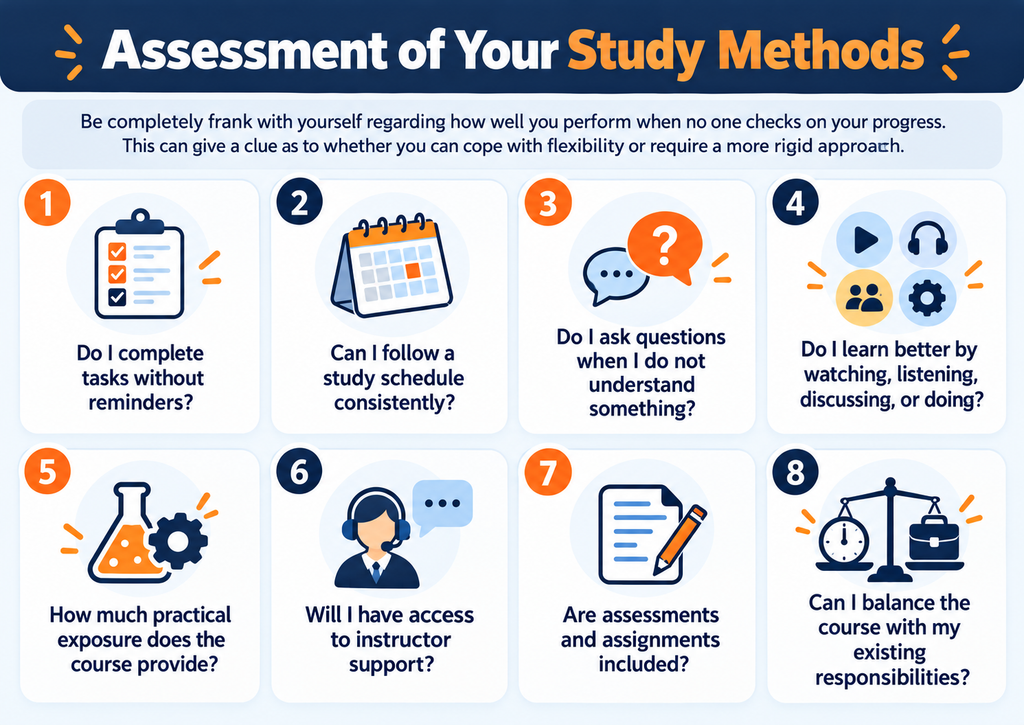
Your answers can reveal which format is more suitable.
What Makes a Training Program Effective?
While the delivery style of the training program matters, it does not necessarily guarantee learning.
A badly designed classroom training program might be inferior compared to a well-designed online training program, and vice versa. Even hundreds of videos in an online training program would fail to yield significant learning without proper guidance or exposure to the students.
Some key features include:
- Well-trained instructors: Good trainers will help learners understand and link theories to real life.
- Practice: Learners should have a chance to put their learning into practice.
- Assessments: Tests are important in identifying knowledge gaps in learners.
- Doubt resolution: It is important for learners to get help solving doubts.
- Relevant content: Learning programs intended to prepare for careers should address current industry demands.
- Practical assignments: Practical work increases learners’ confidence and prepares them for jobs.
- Learning feedback: Feedbacks can help learners become accountable for their learning.
Overall, the quality of training is more important than the delivery mode.
Conclusion
Educational futures are proving to be more flexible in nature; however, being flexible doesn’t mean that you will succeed. Whether you go for online training, classroom training, or both, success will depend on discipline, interaction, practice, flexibility, and accountability.
Although online training will give you the benefit of convenience and accessibility, classroom training can provide you with structure and customization. It all depends on what works best for you and what you require for your career.
Therefore, before registering for the next class, know yourself well. Take what you need in order to learn, not what is convenient.
Check 100% Job Guarantee Courses
- CCIE Enterprise Infrastructure V1.0/R&S Training in India
- CCIE Security V6.1 Course
- Cyber Security & Network Security Course
- Cloud Security + Network Security Expert
Frequently Asked Questions:
Neither option can be regarded as superior because online training works best for flexible students who are self-disciplined, and classroom training works best for those who like structured lessons and interaction.
The advantages of online training include flexibility, location independence, access to recordings, convenience of scheduling, and learning along with your regular commitments such as work and college.
Direct interaction with an instructor during practical activities can be gained through classroom training, but online training programs can help in gaining practical experience as well.
Make a proper study schedule, attend the sessions regularly, set learning objectives on a weekly basis, complete all assignments on time, keep yourself away from all distractions, and test yourself by taking quizzes or practical assignments.
As far as convenience is concerned, online training proves to be better suited for working professionals due to its flexibility; however, working professionals who like rigid schedules may prefer classroom training.
Blended learning is the combination of online training and classroom training where the objective is to get the benefit of both worlds, i.e., the flexibility of online training and classroom training.