What matters is what you are going to learn.
Joining at least a two-month internship where you will actually participate in some tasks will give you more value than a long internship where you will just watch people work.
In case a standard internship is hard to find, look for project-based internships, apprenticeships, volunteering for some technical projects, or practical assignments with a supervisor.
The goal is to gain some evidence showing:
“I have applied my knowledge.”
Introduction: Graduation Day Is Not the End of the Story
Graduation marks the beginning of an exciting new chapter. With your degree in hand and college memories behind you, the next big question naturally becomes:
“So, where are you going to work?”
Some freshers find their first opportunity quickly, while others may take a little more time to discover the right role. That extra time can be valuable—it gives you an opportunity to strengthen your skills, gain practical experience, improve your resume, and prepare better for interviews.
Not getting a job immediately after college does not mean your career is falling behind. In fact, the months after graduation can become an important phase of learning, preparation, and growth that helps you build a stronger start to your professional journey.
The first six months after graduation day can become one of the most precious periods in your career if you utilize them properly.
Do not spend six months searching for a job, freshers should concentrate on skill development, internships, training, communication, and improving your resume and interview skills.
Month 1: Know Your Starting Point
Before going and applying for hundred of jobs, take a moment to ask yourself the following questions:
- What skills do I have?
- What skills does the job of my choice require?
- What are the gaps between the two?
A common mistake that freshers commit is going ahead to apply for every available job. On one day, they are applying for software development, on another for networking, cybersecurity, testing, data analytics, digital marketing and what have you!
This is how a confused career portfolio is created.
Select only one career path for now.
An IT fresher can focus on the following:
- Networking & Network Engineering
- Cyber Security
- Cloud Computing
- Software Development
- Data Analytics
- IT Support
- DevOps
- Software Testing
After identifying your preferred career role, search for a job description and highlight the most repeated skills by employers.
Months 1-2: Build Job Ready Skills
A degree shows that you have done your academics. But it doesn’t necessarily mean that you are job-ready.
That is where job-ready skills of freshers come into play.
For example, if you plan to be a network engineer, you need to learn more than networking theory. The employer may even expect you to know IP Addressing, VLANs, routing, switching, troubleshooting, and network security.
Similarly, if you are aspiring for cybersecurity, you need to take a step further than knowing the meaning of cybersecurity and learn topics like Network Security, Threat Detection, Security Tools, and Basic Troubleshooting.
All that you need to do is:
Shift from “I know” to “I can work with it.”
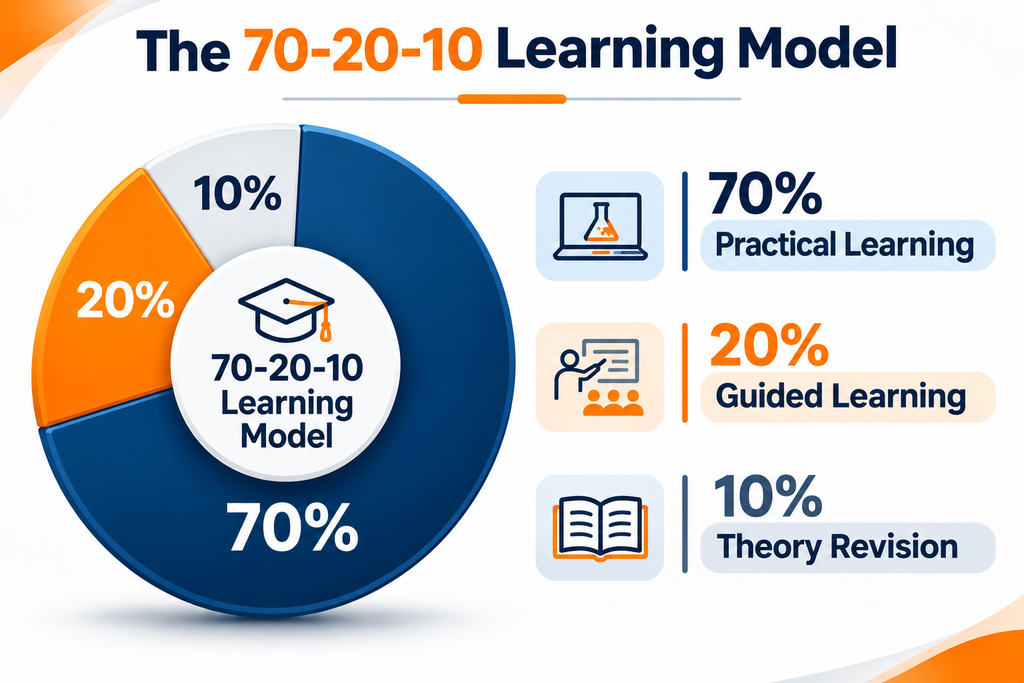
Follow the 70-20-10 method
Months 2-3: Think about Professional Training
For many freshers, professional training after their graduation could reduce the time spent learning the ropes.
The correct training course would give you a learning guide, practical exposure, a trainer, projects, and interview preparation.
But remember that you must not join any course only for certification.
Before joining any such training program, always check if
- Does it include practical training?
- Will I be working on some projects or lab work?
- Is the curriculum in line with industry needs?
- Is there any interview preparation included?
- Will I be taught by experienced trainers?
- Can I showcase the skills on my resume?
- Does it include any internship or placement?
Remember that any certification only helps your resume in showing off skills.
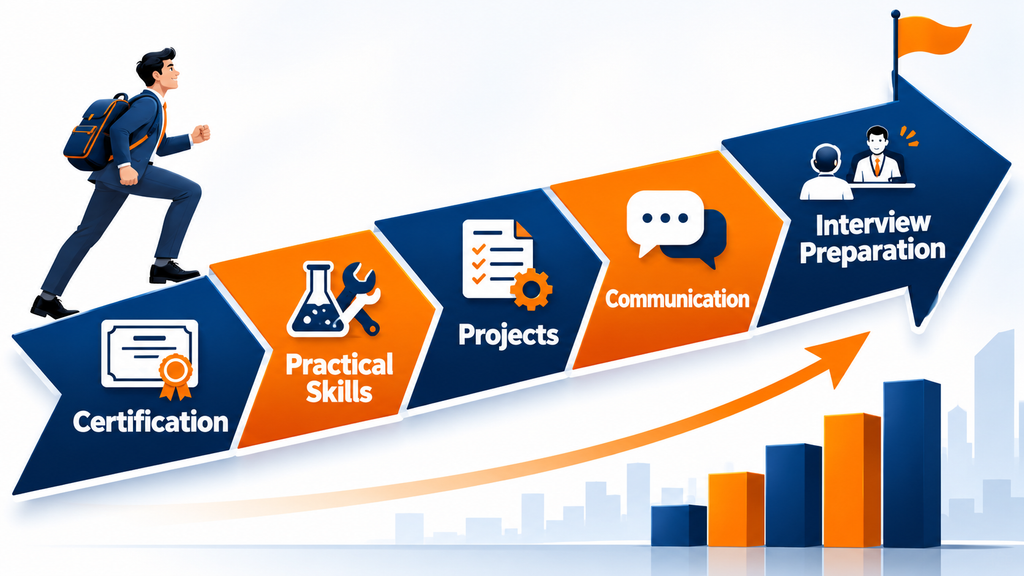
The best combination would be
Months 2-4: Internship Experience—Even if it is just short-term
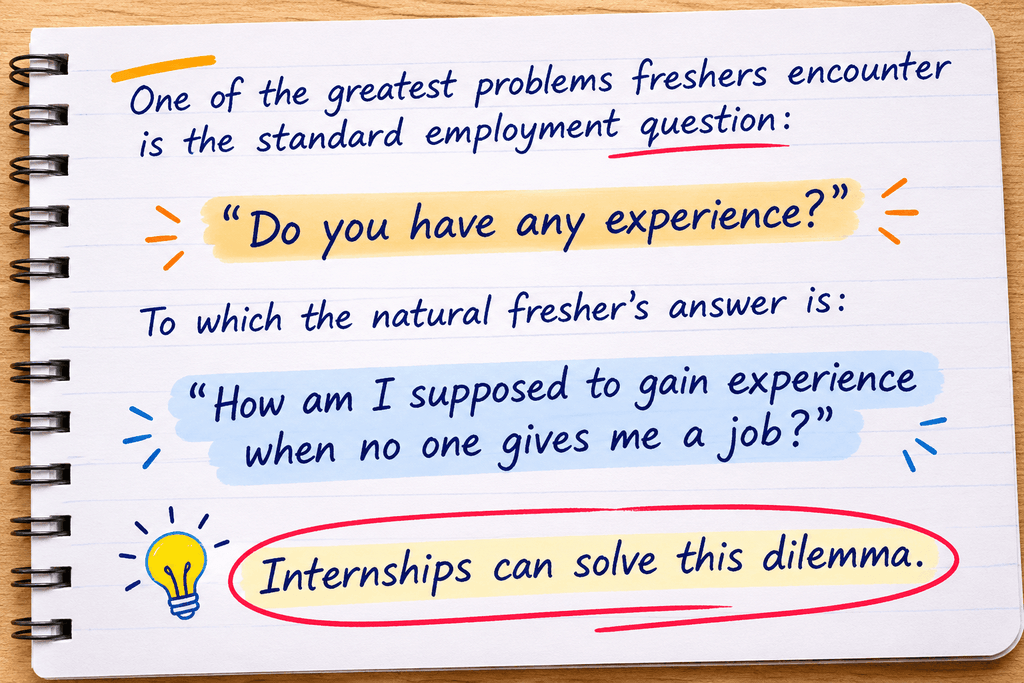
What matters is what you are going to learn.
Joining at least a two-month internship where you will actually participate in some tasks will give you more value than a long internship where you will just watch people work.
In case a standard internship is hard to find, look for project-based internships, apprenticeships, volunteering for some technical projects, or practical assignments with a supervisor.
The goal is to gain some evidence showing:
“I have applied my knowledge.”
Look for internships designed for fresh graduates where you can actively contribute to meaningful tasks and gain practical experience. Depending on your specialisation, this may include network administration, testing, analysis, IT infrastructure support, software development, or other relevant technical work.
When choosing an internship, focus not only on the company name but also on the quality of learning, the responsibilities you will handle, and the practical skills you will develop.
Check internship programs by Network Bulls –
Months 3-4: Craft a Resume that Demonstrates Your Potential
A fresher resume does not have to resemble that of an experienced professional.
It should clearly demonstrate one’s potential, abilities, and knowledge gained.
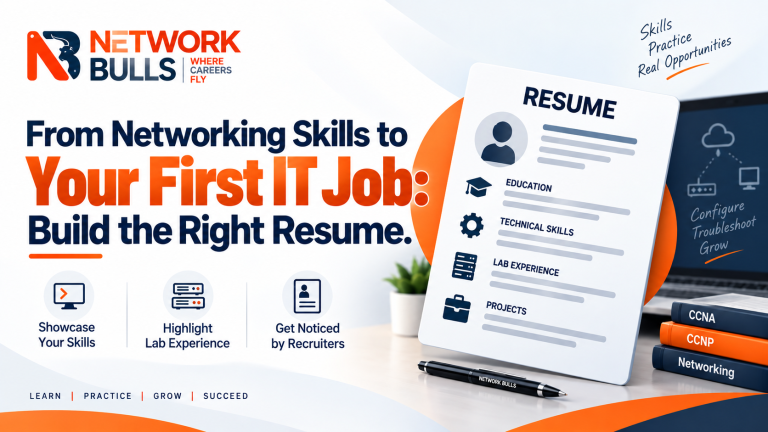
A well-crafted fresher resume would ideally consist of:
1. Career objectives or summary statement
Make sure it is relevant to your desired position.
2. Technical skills
Highlight the technical skills, including technologies, tools, platforms, programming languages, or networking concepts you know.
3. Certifications
Include any relevant certification courses.
4. Projects
Projects could be one of the most powerful parts of your fresher resume.
Do not write just:
“I completed the networking project.”
Tell us what you did.
For instance,
- Designed network topology.
- Configured VLANs and inter-VLAN routing.
- Applied routing protocols.
- Resolved connectivity problems.
- Documented the network.
Detailed information builds credibility.
5. Internship or practice
Describe your duties and achievements rather than naming only the company.
Keep your resume job-specific
Never send a generic resume to all companies.
If you are applying for a job related to cybersecurity, showcase your projects and expertise in this field.
If you are going for networking positions, show your knowledge of network labs, certifications, troubleshooting, and associated technologies.
Your resume should provide a clear answer to the question: “Why should we interview this candidate for this position?”
Months 3-5: Build Communication Skills
Technical knowledge will help get you shortlisted.
Communication will help you get hired.
This is often an underrated aspect of the hiring process by many freshers.
You need not necessarily have excellent English language skills or a fancy vocabulary. You just need to communicate clearly and professionally.
| Prepare your answers to the following questions: |
|---|
| Tell us about yourself. |
| Why should we hire you? |
| What are your strong points? |
| What did you learn from your internships? |
| How was your final year project? |
| What made you choose this profession? |
| Where do you see yourself in the coming years? |
Record yourself while answering these questions.
Listen to the recording.
Are you talking too fast? Are you repeating words? Is there too much information? Are you having trouble explaining your project?
Correct one problem at a time.
Alternatively, you could practice communicating on any technical subject for five minutes everyday.
Please note that:

Communication is not about impressing others. It is about being understood.
Months 4-5: Preparing for Interviews Before You Receive the Interview Invitation
The biggest mistake that freshers make in their preparations is getting ready for interviews after receiving an interview invitation.
By that time, you might not have enough time left.
So, start early.
Distribute your preparations across three different aspects.
Technical Preparation
Go through your basics and answer questions relevant to your target position.
If you are an IT fresher, some possible aspects to revise are network basics, operating systems, database management, programming basics, cybersecurity basics, cloud concepts, or problem-solving.
Project Preparation
Understand your project thoroughly.
Here are some points to keep in mind:
- What problem did you solve?
- Why did you opt for the project?
- What tools did you use?
- What were the challenges you faced?
- What was your contribution?
- What would you do differently?
HR Preparation
Get ready with the answers to the most common HR interview questions.
However, don’t memorize your answers.
An interviewer will notice if you are reciting your answers.
Months 5-6: Build Your Job Search System
Now you should not just be “job searching.”
It should be your job search system.
Establish weekly goals.
For instance:
- Submit applications for relevant jobs regularly.
- Network with recruiters and professionals.
- Attend career fairs or webinars.
- Finish one project/assignment.
- Revise answers to interview questions.
- Develop one technical skill.
- Update your resume.
- Record applications and feedback.
Develop a basic spreadsheet that includes columns like:
Company | Position | Date of Application | Status of Application | Date of Interview | Follow-up
This will help prevent your job search from becoming disorganized.
But most importantly, track efforts and results.
In case you apply to 50 relevant jobs and get only a couple of calls, either your resume or targeting needs improvement.
In case you get interviews but struggle to pass them, your interview skills need improvement.
And in case you make it to technical interviews but do not pass, your technical knowledge is weak.
Each failed application gives you information.
Learn from it.
Establish Your Personal Brand During Your Job Hunt
The resume is not the only way through which the employer finds you.
Establish a professional online presence.
Ensure that your LinkedIn page includes:
- Professional heading
- Technical skillset
- Certifications
- Projects
- Internship experience
- Career interests
You can also showcase what you learn.
For instance, once you complete your networking lab assignment, write about what you have learned from it. In the same way, once you finish your projects, explain the problem you have solved.
You do not have to be an influencer.
All that you need to do is just highlight your professional journey.
Mistakes Freshers Should Not Commit
| 1 | Sending out resumes haphazardly | More does not necessarily mean more chances. Apply wisely. |
| 2 | Amassing certificates without having any skills | Having ten certificates will not help in any way if you have no practical skills at all. |
| 3 | Waiting for the “ideal” job | First jobs are never the end of everything. Think of it as an opportunity for experience. |
| 4 | Neglecting communication skills | Knowing how to communicate well might be as crucial as technical skills in job interviews. |
| 5 | Giving up after being rejected | Being rejected is disappointing, but it is certainly not the end of your life. |
| 6 | Comparing yourself to your fellow students | If someone got hired before you, it doesn’t mean that you’ll never get a job because of that. All careers are not on the same time scale. |
| 7 | Inconsistency | Studying for ten hours now and not doing anything for two weeks afterwards is less efficient than studying for one hour daily. |
Conclusion
The absence of immediate employment out of college may seem disappointing.
However, six months of deliberate preparation may alter your entire resume.
Consider the difference between the following candidates:
Candidate A:
“A recent graduate seeking an opportunity.”
Candidate B:
“A recent graduate with industry-relevant preparation, experience in real-life projects, internships, certificate, solid technical foundation, and communication skills.”
It could be the case that both of these candidates graduated with the same degree.
However, only Candidate B proved his/her ability to work.
That is the goal you should set for yourself.
Make use of the next six months by learning, practicing, creating, communicating, applying, failing, improving, and trying once more.
Your first employment might not come exactly when you expected it to.
This doesn’t mean that your career has slowed down.
Sometimes, those six months of preparation will form the basis of all further developments.
Do not waste the next six months waiting for a job – make yourself the one everyone is seeking for.
How Network Bulls Helps You Move from Learning to Getting Placed
Becoming job-ready is only one part of starting a successful IT career. You also need access to the right job opportunities, interviews, and placement support.
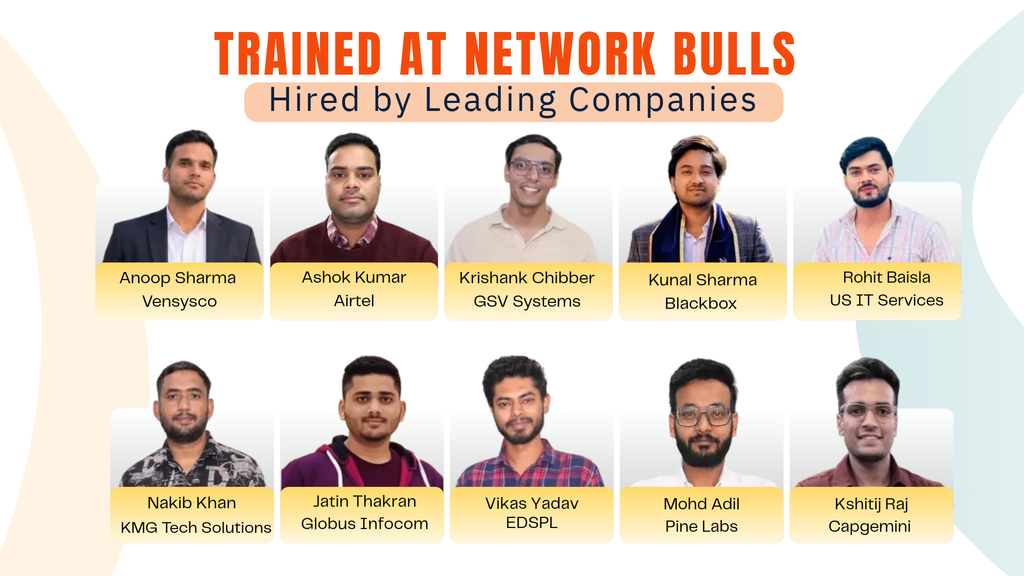
That is where the Network Bulls Job Guarantee Programs in IT Networking, Security and cloud technologies goes beyond regular IT training.
Network Bulls follows an end-to-end approach that starts with building your technical expertise and continues through grooming, interview preparation, job interviews, and placement. For eligible students enrolled in Job Guarantee courses, the objective is not simply to complete training—it is to help them get placed and start their IT career.
| From Training to Placement — The Complete Process |
|---|
| Technical Expertise Training: Build strong networking, security, cloud, and related technical skills through structured classroom training, practical configurations, troubleshooting, and extensive lab practice. |
| 24×7 Practical Lab Facility: Strengthen your knowledge by practising technologies and real networking scenarios beyond classroom theory. |
| Resume & CV Preparation: Get guidance to create a job-focused resume that effectively presents your certifications, technical skills, projects, lab experience, and practical knowledge. |
| Communication & Personality Development: Improve spoken English, professional communication, presentation skills, group discussion performance, and overall interview confidence. |
| Interview Preparation: Prepare for technical and HR interview rounds through dedicated interview-preparation classes and mock interviews. |
| Job Interviews & Placement: Once the required training and preparation are completed, the Network Bulls Placement Team lines up relevant job interview opportunities with IT companies. Under the applicable Job Guarantee Program terms, the placement process continues toward helping eligible students secure a job. |
Network Bulls Doesn’t Stop at “Job-Ready”
The journey is designed to move through every important stage:
Learn → Practice → Build Technical Expertise → Improve Communication → Prepare Your Resume → Crack Interviews → Get Placed
So, instead of completing a course and then being left to search for opportunities on your own, students under the Job Guarantee Program receive structured support from training to interviews and placement.
The aim is simple:
Build the Skills. Prepare for the Industry. Get the Opportunity. Get Placed.
Explore the Network Bulls Job Guarantee Programs and understand the eligible courses, training process, placement process, and applicable terms:
Check 100% Job Guarantee Courses
- CCIE Enterprise Infrastructure V1.0/R&S Training in India
- CCIE Security V6.1 Course
- Cyber Security & Network Security Course
- Cloud Security + Network Security Expert
Frequently asked Questions
There are several ways that freshers can use to build job-ready skills, such as working on some practical projects, gaining experience through internships or any other professional training program, communicating well, improving their resumes and getting prepared for interviews. Developing a six-month career plan will be helpful. Network Bulls provides all-in-one programs for freshers to start their career journey with placement through their Job-guaranteed training programs.
There are many ways to gain experience, such as internships, academic projects, practical labs, certifications, apprenticeships, and training programs. It is important to prove that one has practical skills.
The right skills depend on the target occupation. Networking, cyber security, cloud computing, programming, databases, software testing, DevOps, and IT support are just a few possible IT careers. Freshers need to choose a particular career path and master relevant hard and soft skills.
You should concentrate on skills, certificates, projects, internships, practical experience, accomplishments, and classes that are related to the position. When talking about projects, mention not only names but also the particular steps that were taken and technologies used. You should also tailor your resume to the job descripti
There is no definite answer since everything will depend on the candidate’s skills, target sector, location, job demands, resume, and interview. You shouldn’t be concerned solely with the speed of getting hired; you should also try to improve yourself for several months after graduating. If you are keen to get placed within a year, do check out Network Bulls integrated programs.