The CCIE Security course converts your networking path into real cybersecurity skills. It is built from real-world challenges and trains you to defend modern networks at a high level that only some engineers reach.
As companies move to the cloud and AI, they need experts who can secure everything from routers to next-generation firewalls and threat-intelligence tools. The CCIE Security course trains you for that by teaching how to solve problems most non-certified people can’t even spot.
This guide explains all you need to know before starting CCIE Security if you want cybersecurity roles or want to protect your career with one of the world’s most respected certifications.
What Is the CCIE Security Course?
CCIE Security is an advanced-level course and certification training in the field. It enables IT professionals to master advanced network security technology and focus more on practical skills for the protection of complex enterprise networks, smart threat detection, and end-to-end security setup.
This course goes beyond basic firewall or routing knowledge. It covers next-generation technologies such as identity management, VPN designs, intrusion prevention, advanced threat defense, and automation and modern security frameworks that are being used by large organizations.
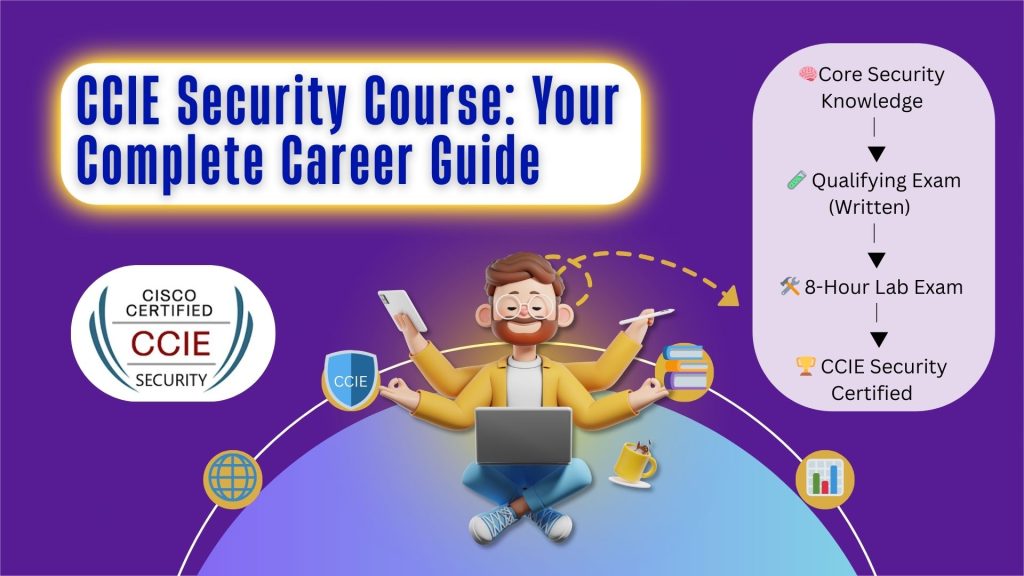
By the end, you’ll be ready to take the CCIE Security lab exam—a highly respected cybersecurity validation.
The course, in simple terms, turns networking pros into top-level security experts who are able to protect large networks from the toughest cyberattacks.
CCIE Security Course Modules (Typical Training Structure)
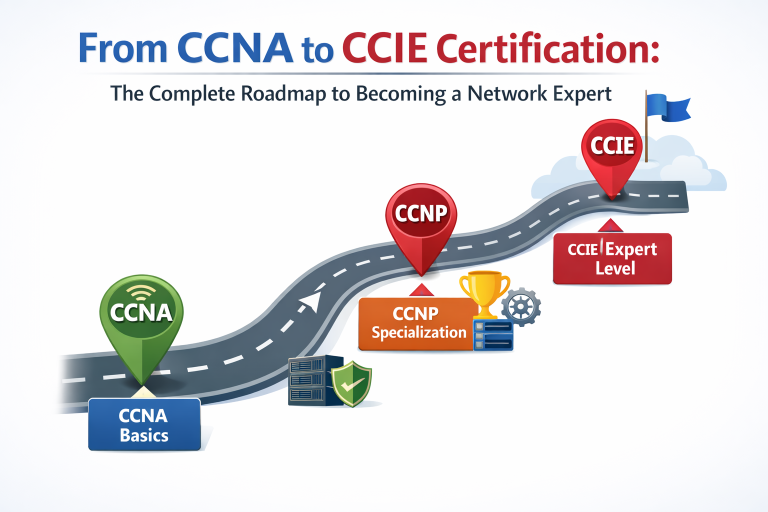
The CCIE Security Course builds your skills in Networking and Cybersecurity. It uses a clear path that strengthens the basics, grows networking knowledge, and then teaches advanced security ideas. Here’s what each stage usually includes:
CCNA (Networking Fundamentals)
The CCNA is one of the main starting certifications that covers IP addressing, OSI Model, routing, switching, VLANs, and basic device security. It helps you understand how the networks work, how data moves, and how parts interact-important when working with advanced security technology.
CCNP Enterprise (Advanced Routing & Switching)
Here, one acquires the ability to design and manage more complex networks. CCNP Enterprise enhances your knowledge in advanced routing, Layer 2 technology, Enterprise design, and how to perform troubleshooting. Since security begins with a good network, this module provides the necessary knowledge of design and operation to secure large networks.
CCNP Security (Core + Concentrations)
The CCNP Security module upgrades your defense skills to a deployment-ready level. This module covers identity and access policies, safe remote access, threat prevention, content filtering, VPN designs, and endpoint protection. You learn how to set up and optimize security across layers to protect networks. You start using advanced security tools and real-world scenarios.
CCIE Security v6.1 Advanced Training
The CCIE Security v6.1 is the expert part of the course: learning how to design, integrate, automate, and troubleshoot large security systems. The focus is on solving problems in the real world-from threat detection and policy enforcement to cloud and automation work used by global organizations.
Firewall Specialization
In the Firewall Course Training, you gain hands-on practice with enterprise firewalls and security devices used in different setups. You learn how to create policies, manage NAT, set up VPNs, prevent threats, and improve firewall speed. This helps you handle multi-vendor setups and get ready for real jobs where organizations use many security platforms.
Career Opportunities After CCIE Security
The CCIE Security certification opens the door to top, high-paying roles in cybersecurity. Companies hire CCIE pros to design, secure, and maintain large networks because the certification evidences expert-level, real-world skills. Here are common paths:
- Network Security Engineer – secures enterprise networks, implements security policies, and deploys threat prevention.
- Security Analyst – in charge of security events monitoring, vulnerabilities, and incident investigation.
- Firewall Engineer / Specialist – responsible for the setup and optimization of firewalls from various vendors.
- Cybersecurity Consultant – Provides advice on secure architectures and best practices.
- SOC (Security Operations Center) Engineer – responsible for real-time threat monitoring, detection, and incident response.
- Security Architect – Designs end-to-end security plans for big businesses.
- Network Security Manager –leads security teams, oversees compliance issues, and informs security strategy.
Salary After CCIE Security Certification
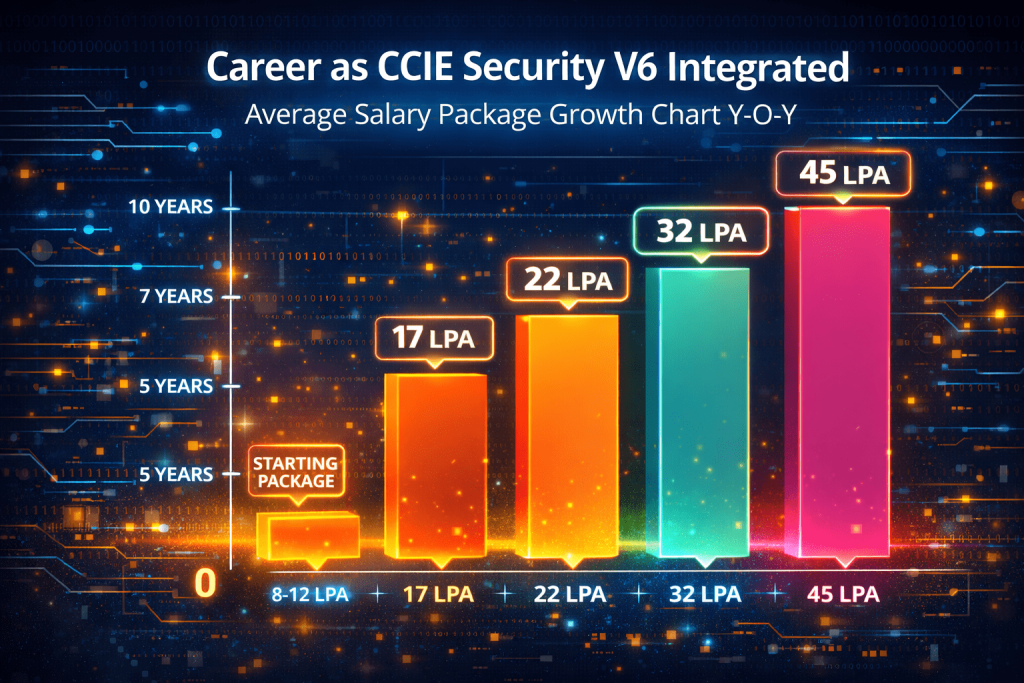
CCIE Security is among the highest-paid IT certifications. While salaries vary depending on experience, location, and job description, holders of the CCIE certification generally earn top packages:
CCIE Security Training at Network Bulls
Network Bulls offers the CCIE Security V6.1 Integrated Training Program, turning aspiring network pros into expert security engineers. It is considered one of the major Cisco certifications, dealing with advanced routing, switching, and next-generation security technologies.
Why Choose Network Bulls?
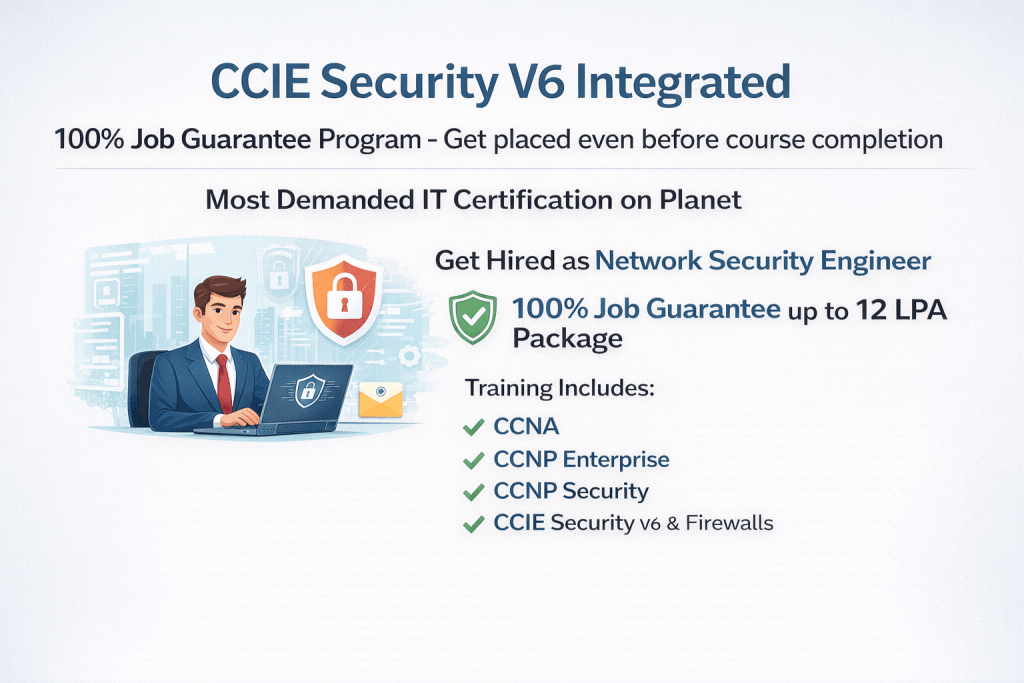
- 100% Placement Guarantee – Graduates who complete this program can start with up to ₹12 LPA.
- Integrated Training Approach – Consolidates CCNA, CCNP, CCNP Security, and CCIE Security V6.1 courses along with firewall specialization using Palo Alto or FortiGate.
- Hands-On Labs – Practice on real Cisco routers, switches, ASA firewalls, wireless controllers, and virtual appliances.
- Personality Development & Interview Prep. – Training in Communication, Soft Skills, and Mock Interviews.
- Lifetime Placement Assistance – Alumni can contact placement staff anytime for new opportunities.
Modules Covered
| Module | What You Will Learn |
| CCNA | Fundamentals of networking, routing, and switching |
| CCNP Enterprise | ENCOR, ENARSI, and advanced routing & switching tech. |
| CCNP Security | Configuration, deployment, and troubleshooting of security devices on networks |
| CCIE Security V6.1 | Expert security concepts, lab preparation. |
| Firewall Specialization | Hands-on experience working with either Palo Alto or FortiGate firewalls, focusing on configuration, threat prevention, and policy |
By the end, the students are CCIE Security-exam-ready and have real-world experience for highly paid security jobs all over the world.
Conclusion
The CCIE Security course opens the doorway to highly paid, future-proof cyber careers. This training program will help you to handle real-time challenges in large networks, with expert-level training, hands-on practice, and coverage of both networking and advanced security technologies.
Network Bulls amplifies this journey with integrated training, personalized mentorship, and guaranteed placement support.
Frequently Asked Questions (FAQs) : CCIE Security Course
1. Is CCIE Security difficult?
CCIE Security is considered one of the most difficult networking certifications. Due to its advanced topics, hands-on lab exams, and deep technical expertise – students often find it hard to qualify, but with consistance efforts, right training, lab practice and self study it is achievable.
2. What is the salary of a CCIE Security engineer?
The salary of a CCIE Security–certified professional grows steadily with experience and can reach up to ₹45 LPA within 10 years in India.
3. How much does the CCIE security certification cost?
The cost of the CCIE Security written exam is around ₹35,750 ($400) written core exam (350-701 SCOR) and the ~₹1,43,000 ($1,600) 8-hour hands-on lab exam. One can opt for training programs to qualify these , which adds to the overall cost.
5. Who is eligible for CCIE Security Certification exam?
There’s no formal eligibility criteria. However, the candidates should have strong networking experience, typically 3–5 years, and in-depth knowledge of routing, switching, and security concepts to qualify for CCIE.